Convenient opening hours.
We’re here until 6 pm Monday through Thursday and until 3 pm on Fridays. That makes it easier to fit appointments around school, work and family life.
We bring together heart and high tech. Because modern orthodontics should do more – for your results and your treatment experience.
We’re here until 6 pm Monday through Thursday and until 3 pm on Fridays. That makes it easier to fit appointments around school, work and family life.
We treat patients in individual rooms, with space for personal conversations and a calm, private treatment environment.
Our practice remains available throughout the school holidays. If a problem arises during the holidays, we are here for you.
Modern technology is not an end in itself. It should make treatment more comfortable while helping us achieve a better result.
Our goal: a better treatment result through an easier, more comfortable and as efficient a journey as possible. Which options genuinely offer an advantage depends on your individual situation and the procedure involved. We discuss both the expected benefits and the limitations.
We offer a range of modern treatment techniques that go beyond what German statutory health insurance covers. Below, we introduce some of these options and explain the benefits they may offer for your treatment. You receive a clear, well-reasoned recommendation so you can make an informed choice.
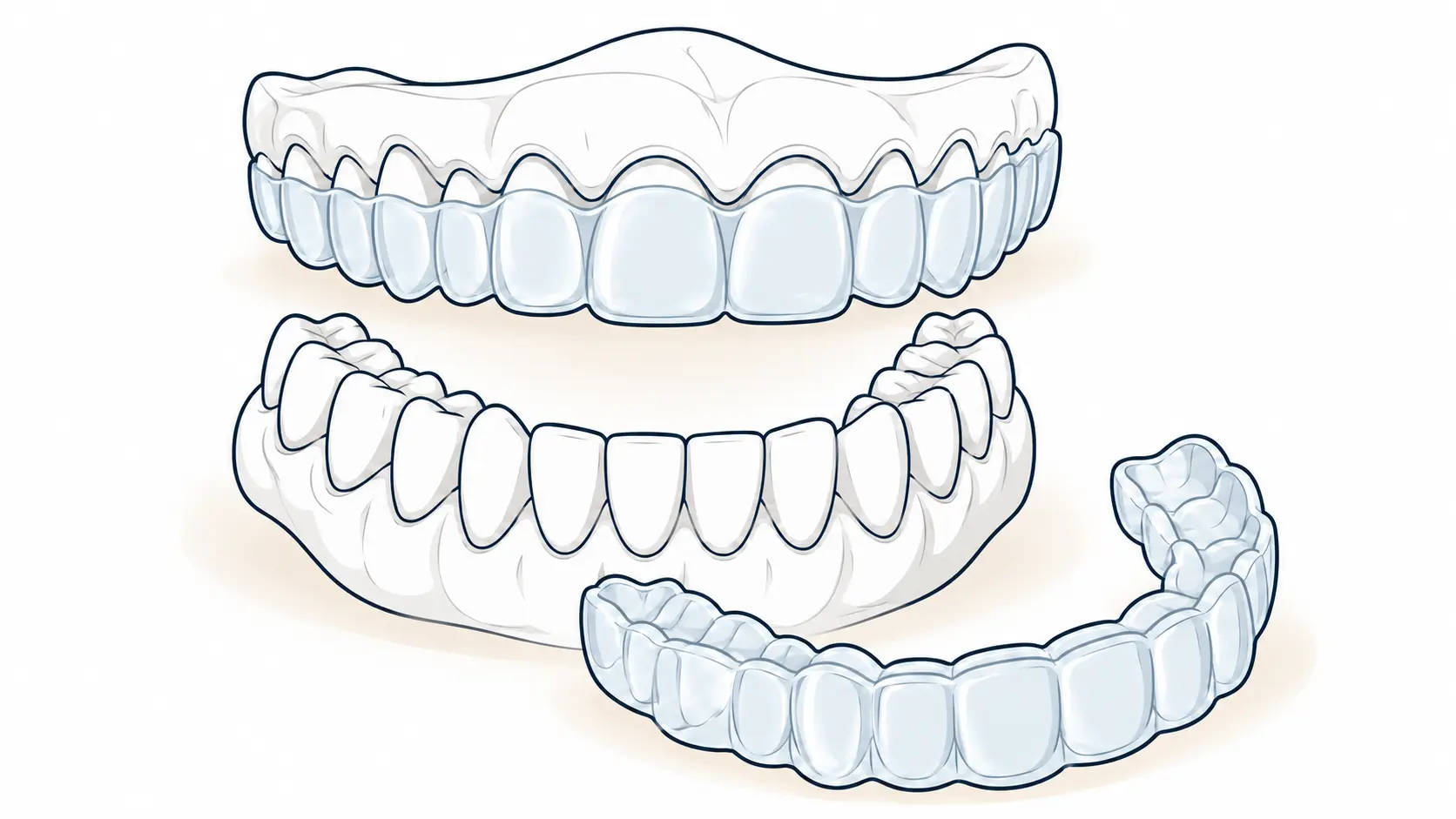
The aligners can be removed for eating and cleaning your teeth. They are generally worn for 20–22 hours a day. Small tooth-colored composite attachments support certain tooth movements. Many types of misalignment can be treated this way, but not all. Movements are planned in small steps, with carefully controlled forces.
For suitable teenagers and adults, clear aligners can be a discreet alternative to fixed braces. Clinical findings, preferences and daily life guide the choice. As an Invisalign Platinum provider, we use the system regularly and bring extensive practical experience to planning and supporting your treatment.
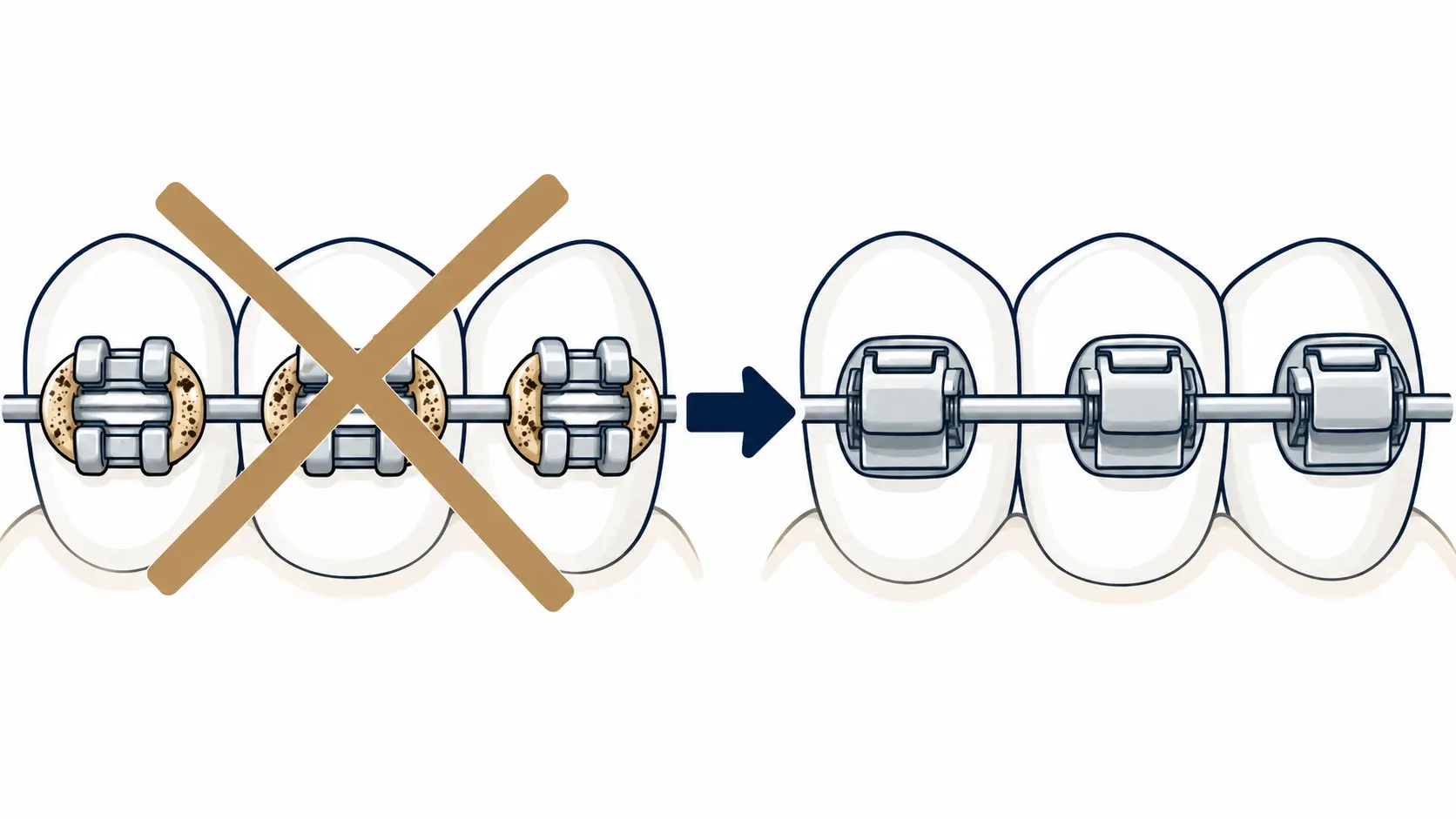
Our self-ligating brackets hold the archwire with an integrated clip. This means we don’t need elastic ligatures, which can deteriorate in the mouth and create additional surfaces where plaque may collect.
Closing the clip holds the archwire securely in the bracket. This supports controlled guidance of the wire and precise adjustment of tooth position. Depending on the treatment stage, the wire can slide with low friction – a carefully designed system for precise treatment.
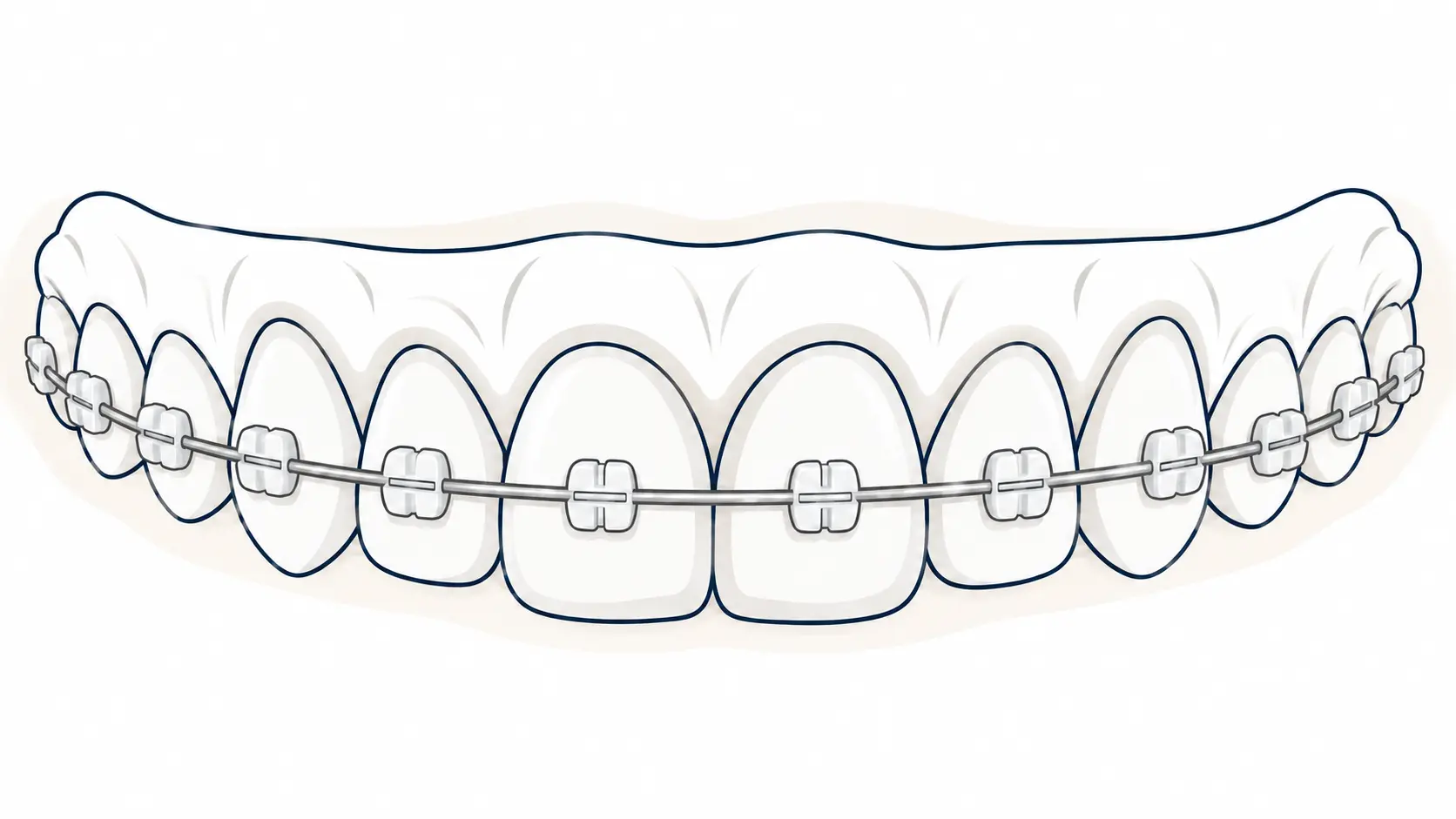
Fixed braces can blend discreetly into your smile. That’s why we offer ceramic brackets for the upper teeth when appropriate. Their tooth-colored appearance makes braces less noticeable in everyday life – when speaking, laughing and in photographs.
We use genuine, color-stable ceramic. This combines the capabilities of fixed braces with a more discreet appearance. Together, we’ll discuss whether ceramic brackets suit your clinical needs and preferences.
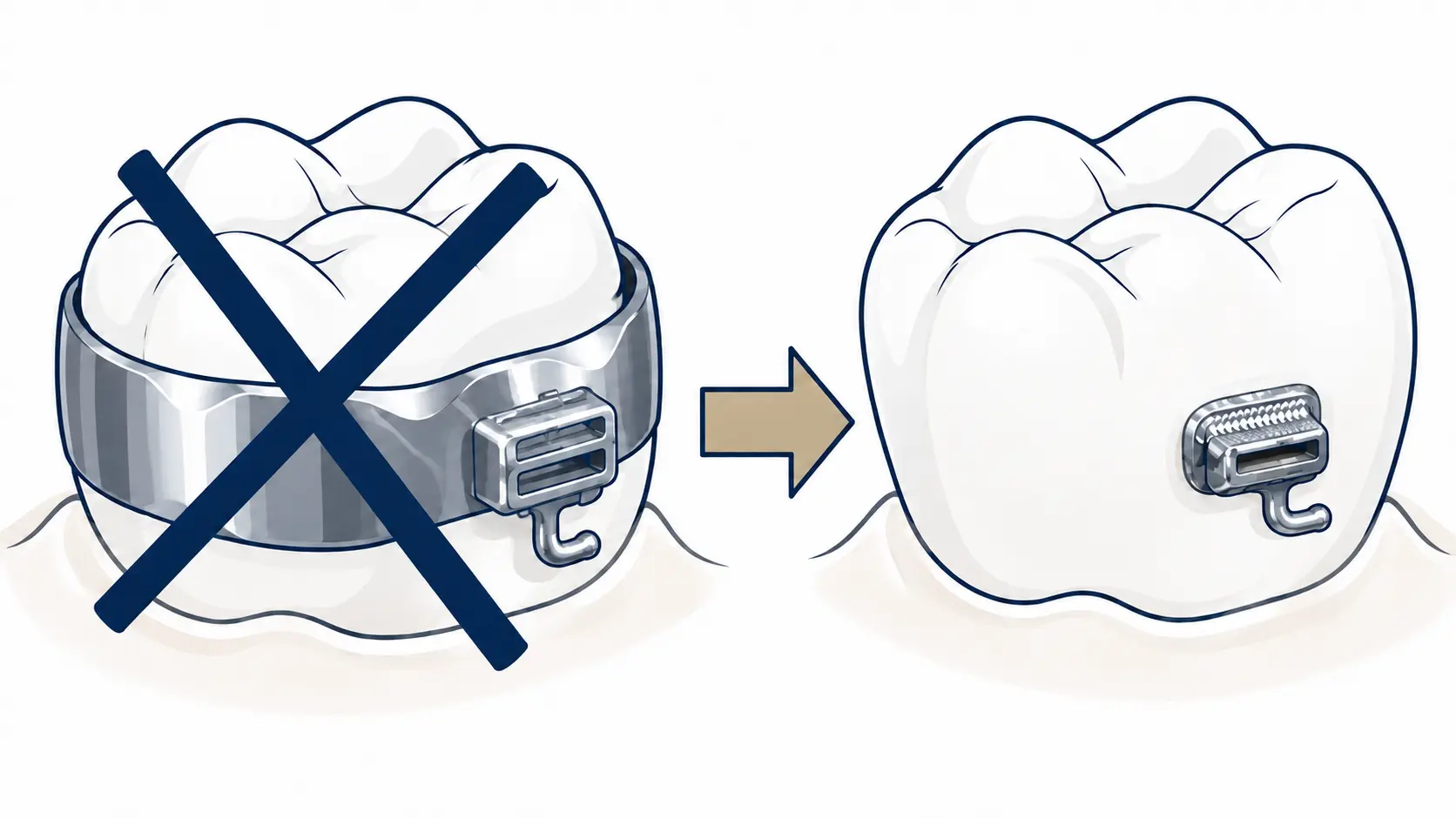
Our treatment approach allows us to avoid conventional metal bands around the teeth. This removes the need for preliminary separation – creating small spaces to fit those bands.
Avoiding metal rings around the teeth makes cleaning easier and prevents pressure on the gums from band edges. It also eliminates the specific risk of decay beneath a loose band. The approach is designed for comfortable treatment and tooth surfaces that are easier to care for.
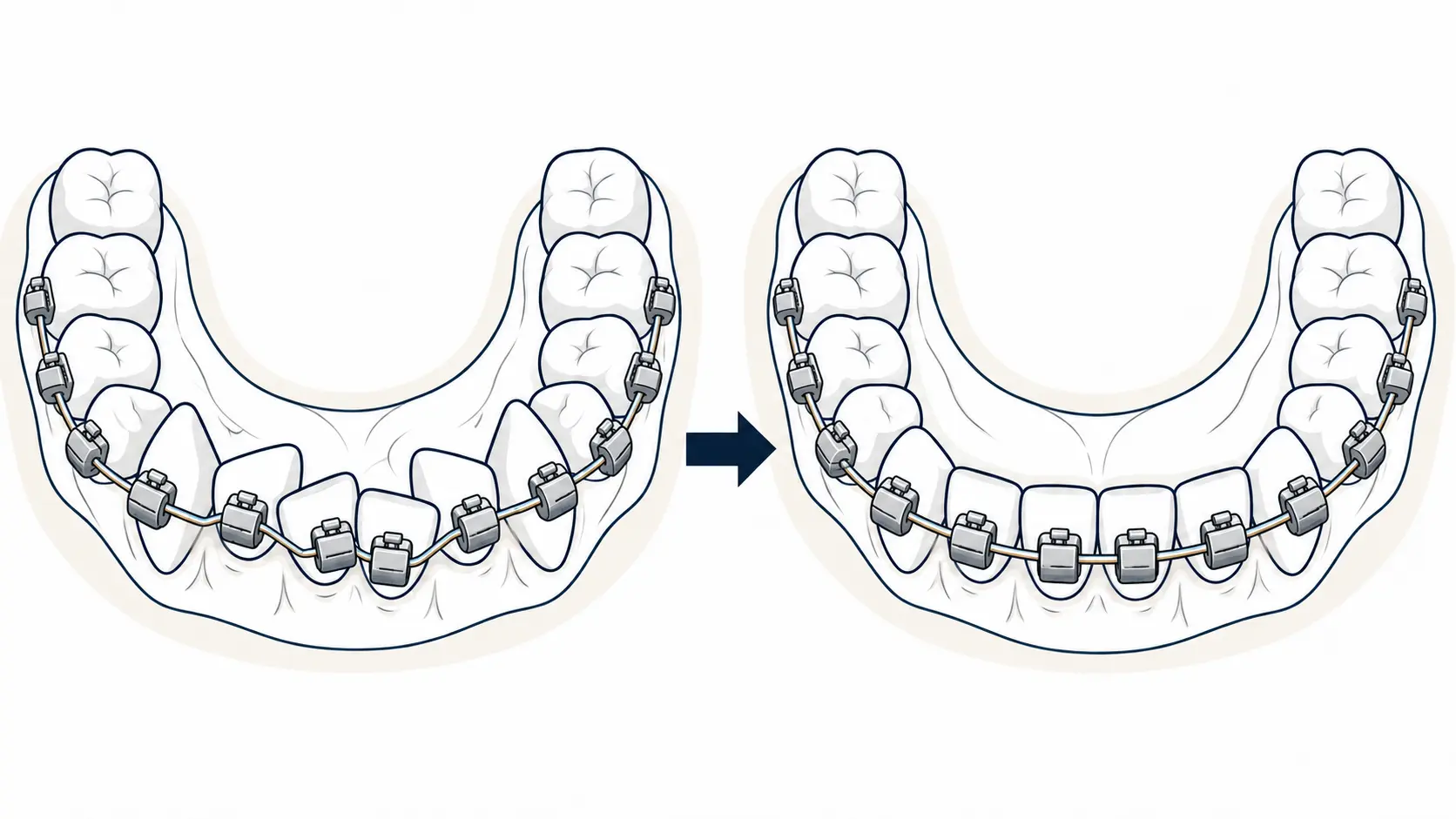
Gentle, step by step: our flexible archwires guide teeth in the desired direction with evenly controlled forces. We change the wires in a carefully coordinated sequence, matched to your treatment progress.
Our aim is to minimize pressure-related tenderness and move teeth and roots gently. The right force at the right time is an important part of comfortable treatment.
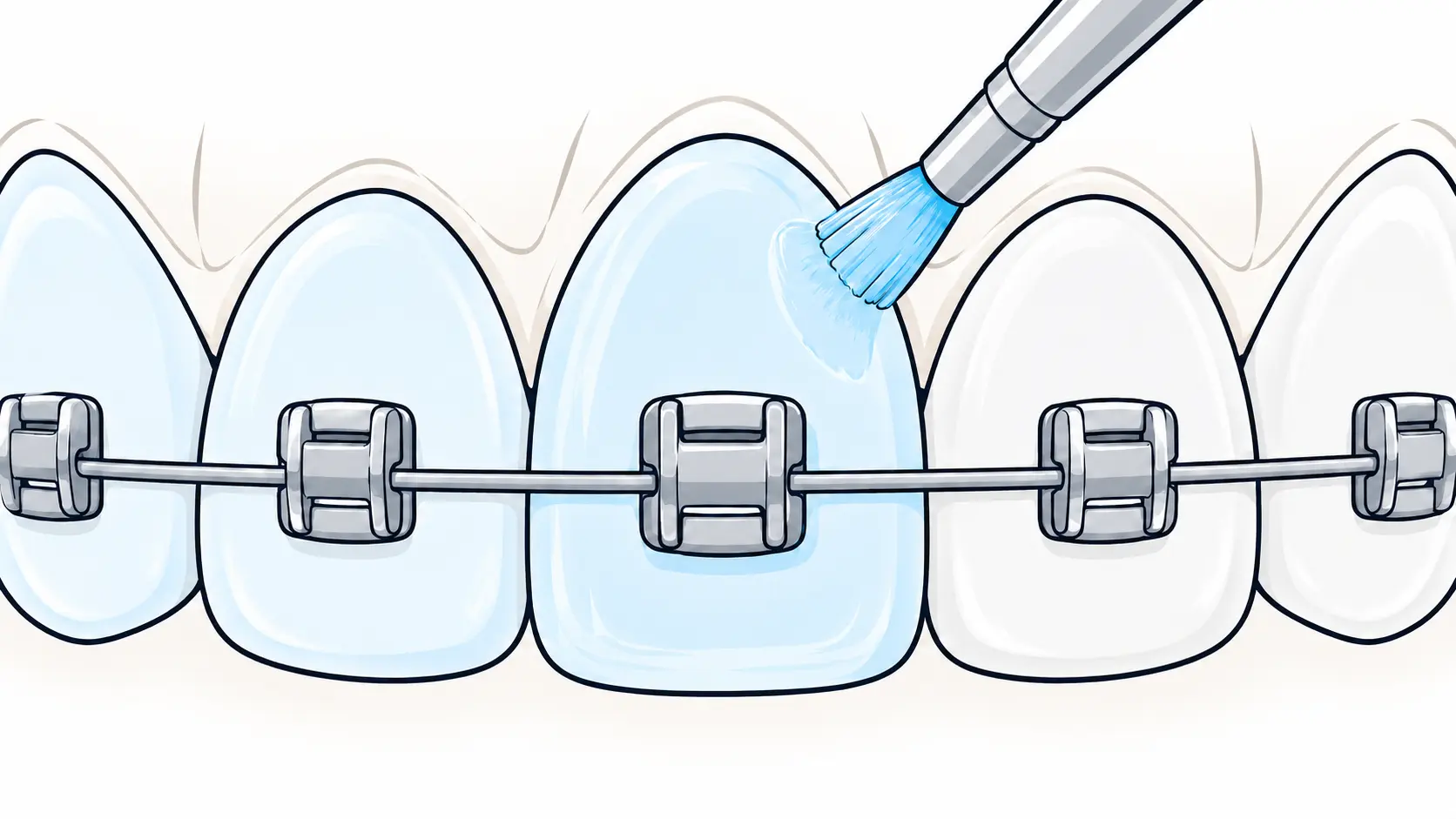
Fixed braces create additional places where plaque can accumulate. If it remains for a long time, white spots may develop around the brackets as early signs of enamel demineralization.
A smooth-surface sealant adds a protective layer to the enamel around the brackets. It complements daily oral hygiene but does not replace it. We assess its condition and protective effect at check-ups.
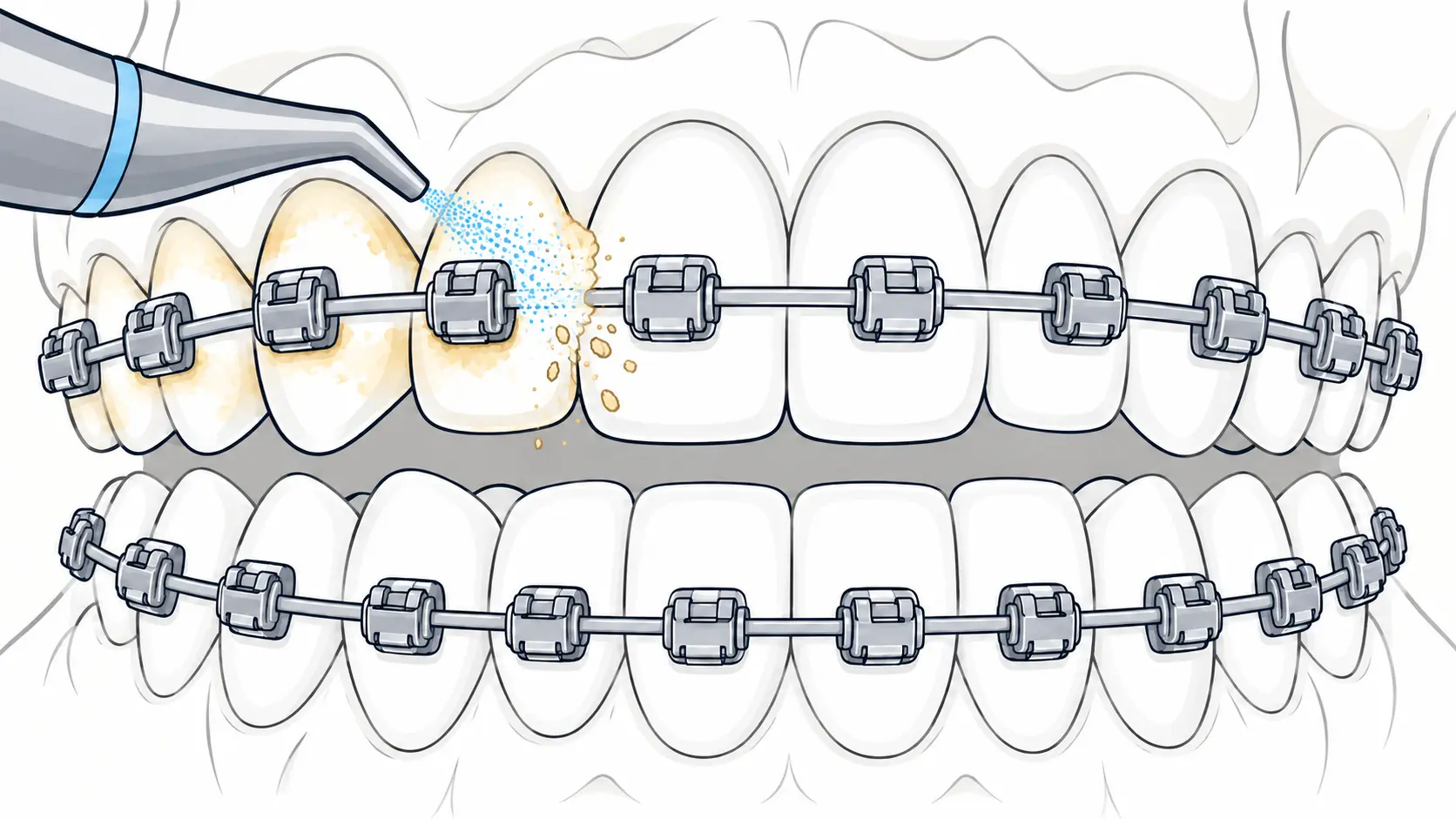
At regular check-ups, we remove plaque, particularly around the brackets. These areas are especially accessible after the archwire is removed during a wire change.
This supportive cleaning complements your home oral hygiene. It replaces neither dental check-ups nor a professional dental cleaning by your dentist, and is not equivalent to that service.
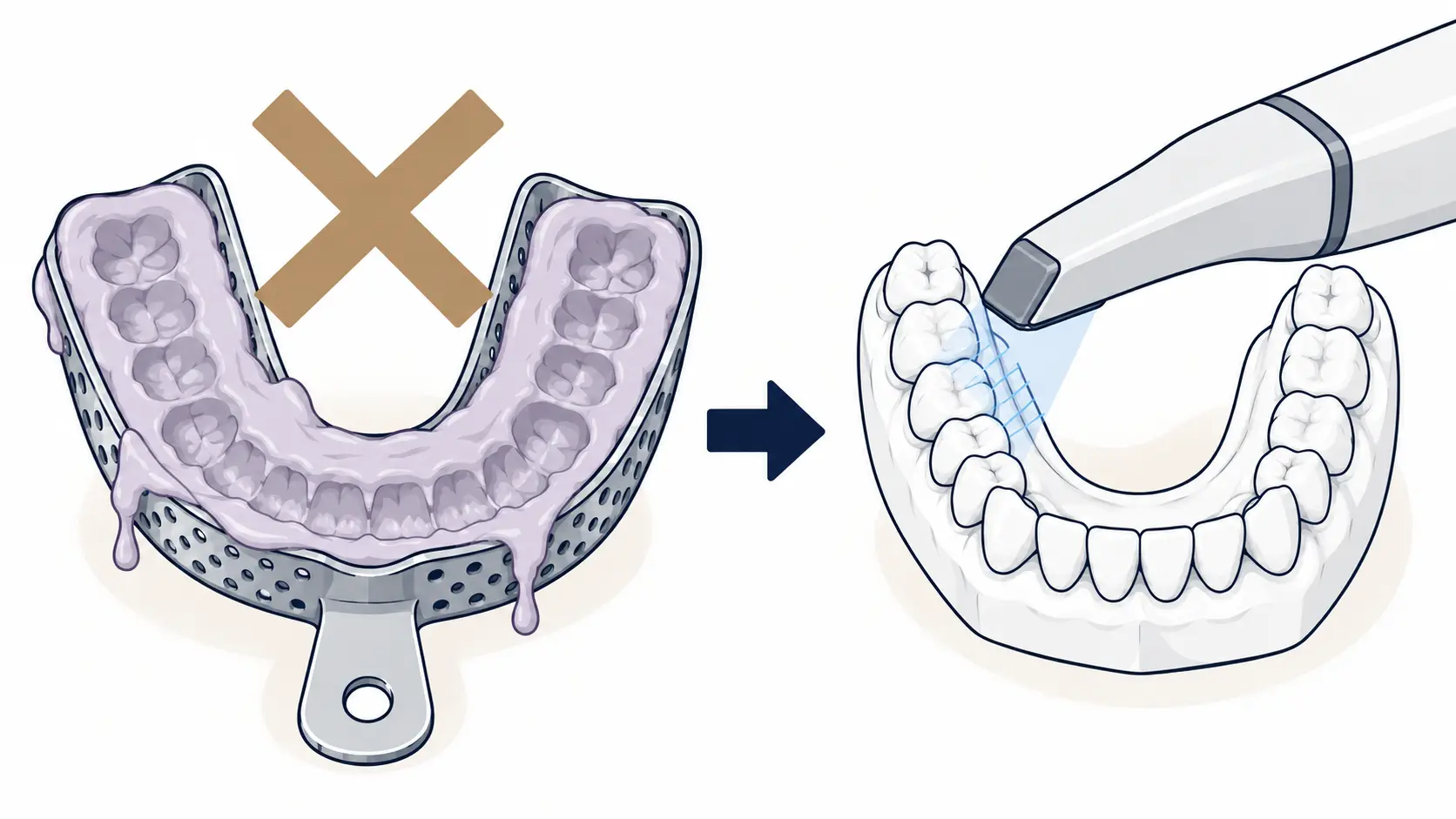
An intraoral scan captures your teeth digitally. Many people find it more comfortable than a conventional impression made with impression material.
The digital models provide a precise basis for assessment, planning and the manufacture of suitable appliances. The most appropriate method depends on the specific task.
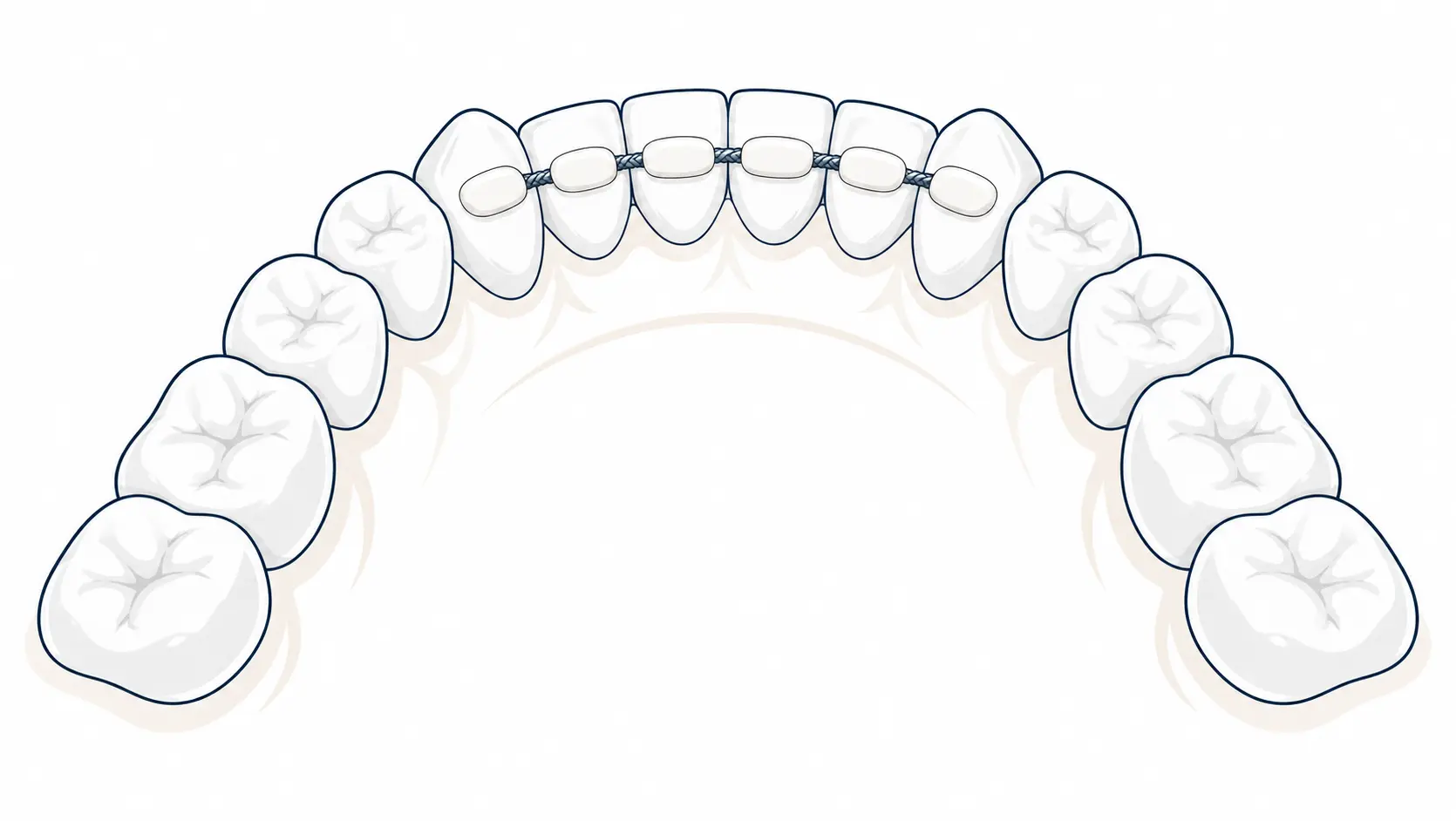
Teeth can shift again over the course of life, independently of wisdom teeth. After active treatment, a retainer helps stabilize the corrected position of the front teeth.
Our retainers are individually manufactured using CAD/CAM technology. Their design aims for a good fit and transitions that are as easy to clean as possible. These retainers also need careful daily care and regular check-ups.
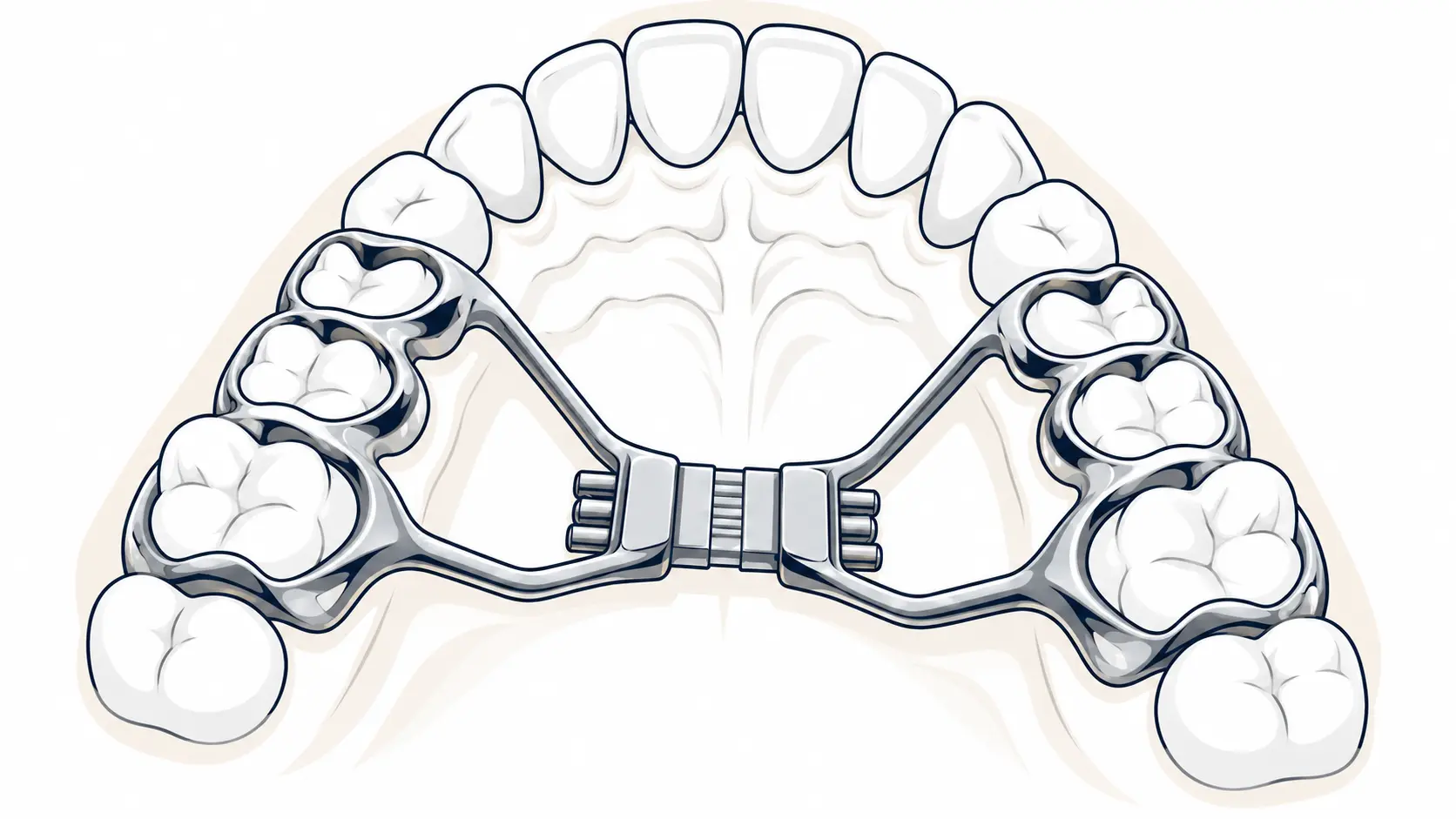
For suitable fixed appliances, such as palatal expanders, we can use custom-made CAD/CAM designs based on a 3D scan.
They can be tailored to the individual anatomy. A slim design, smooth metal surfaces and appropriate clearance from the gums are intended to improve comfort and ease of cleaning. Daily care and check-ups remain important.
The functional regulator developed by Prof. Fränkel is one of our preferred appliances when it suits the clinical findings and growth stage. Its shields sit mainly in the oral vestibule, between the lips or cheeks and the teeth. This leaves the central part of the mouth comparatively clear.
The appliance influences the interaction between soft tissues, muscles and jaw development. Its effects depend on the appliance type, growth and regular wear. Unlike many removable appliances, it does not clasp individual teeth and can therefore accompany the transition to permanent teeth. Adjustments and check-ups are still needed. The functional regulator is worn at home, not when out and about.
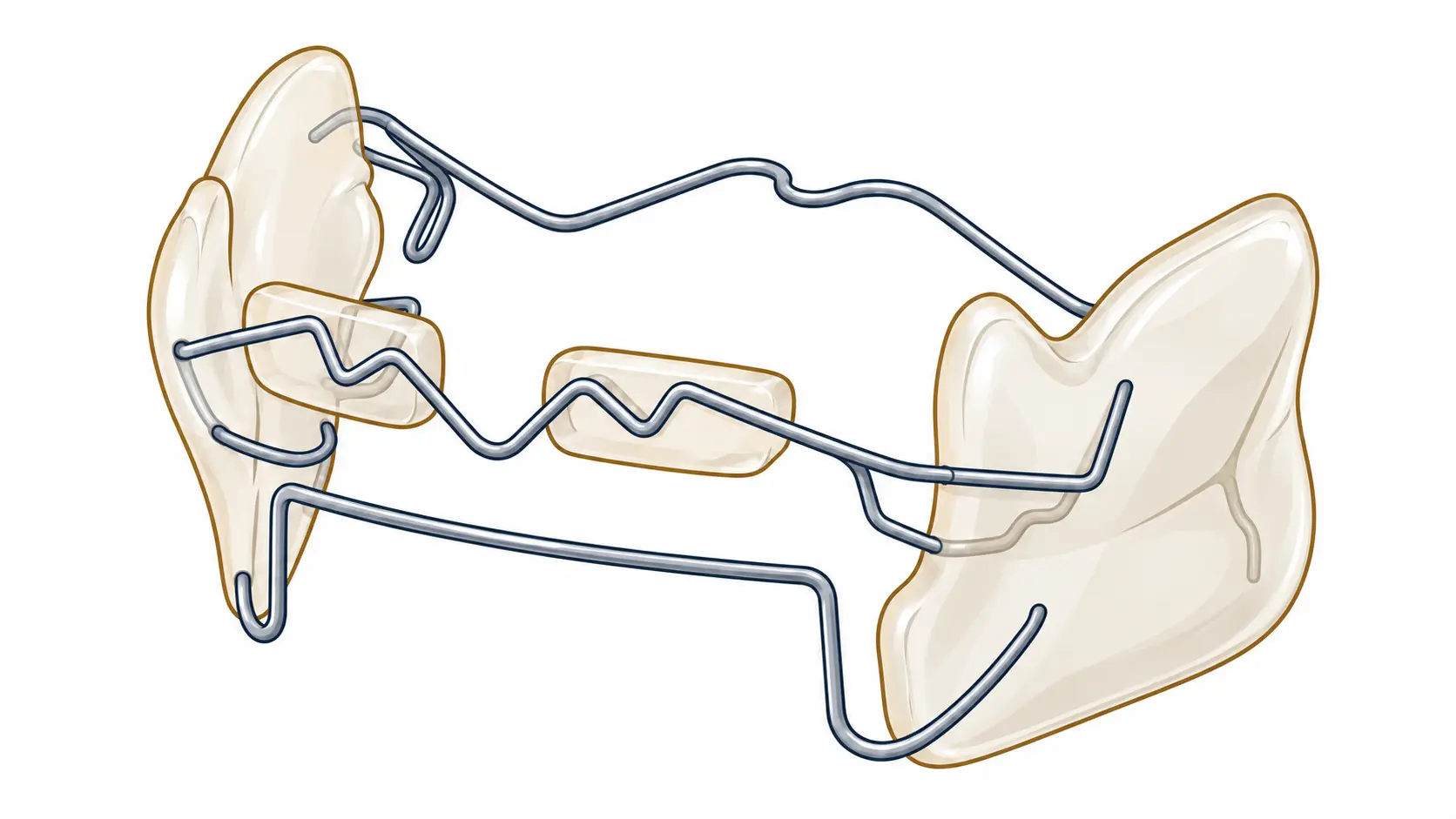
If back teeth have drifted forward, space is limited or the bite needs correcting, a distalization appliance can move the back teeth backwards in suitable cases. This can create space for the other teeth and help correct the bite.
The teeth are then further aligned with fixed braces. In some cases, this can avoid the need for tooth extractions. Whether this is possible and appropriate depends on the available space, the bite and the anatomical limits.
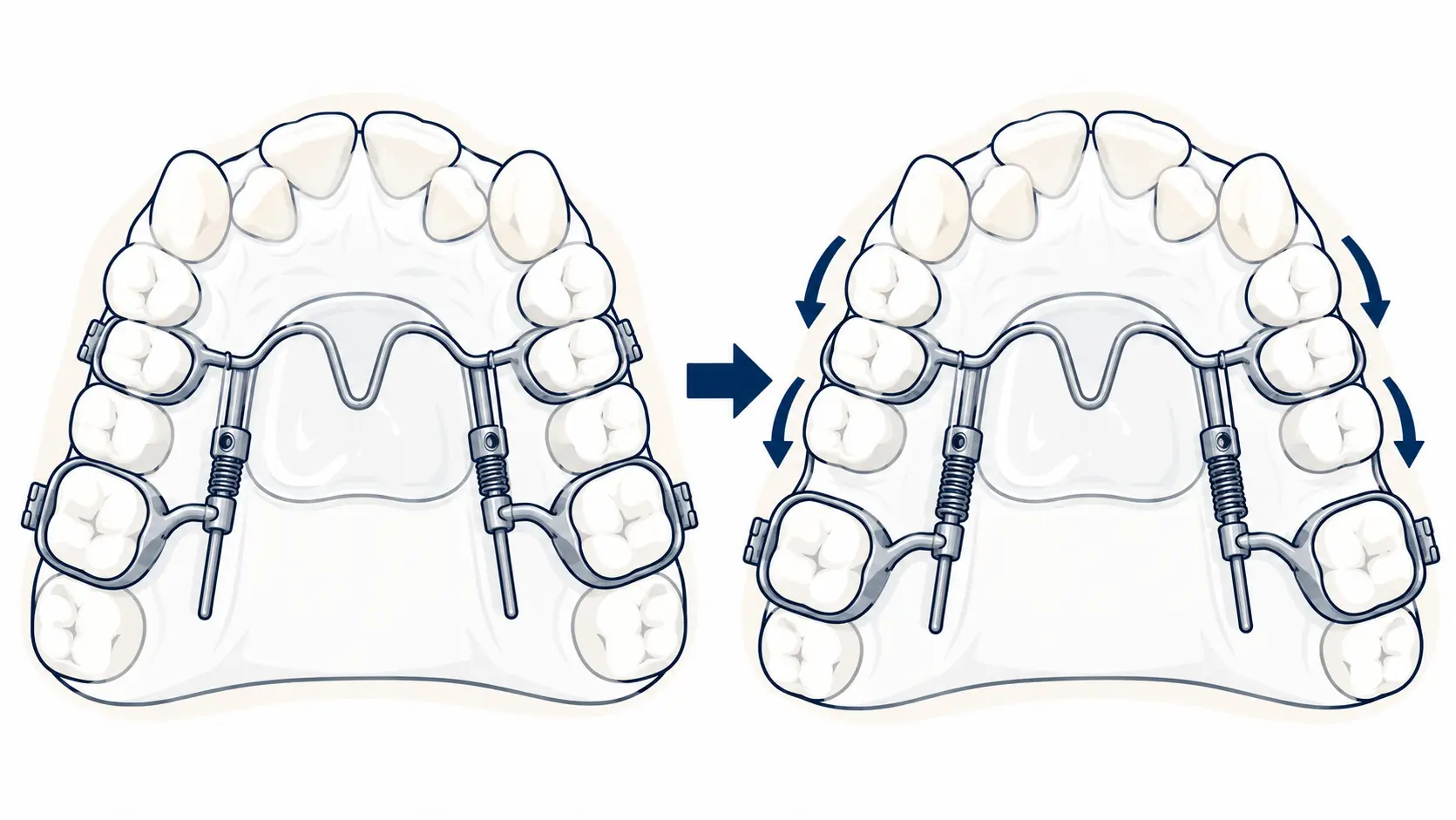
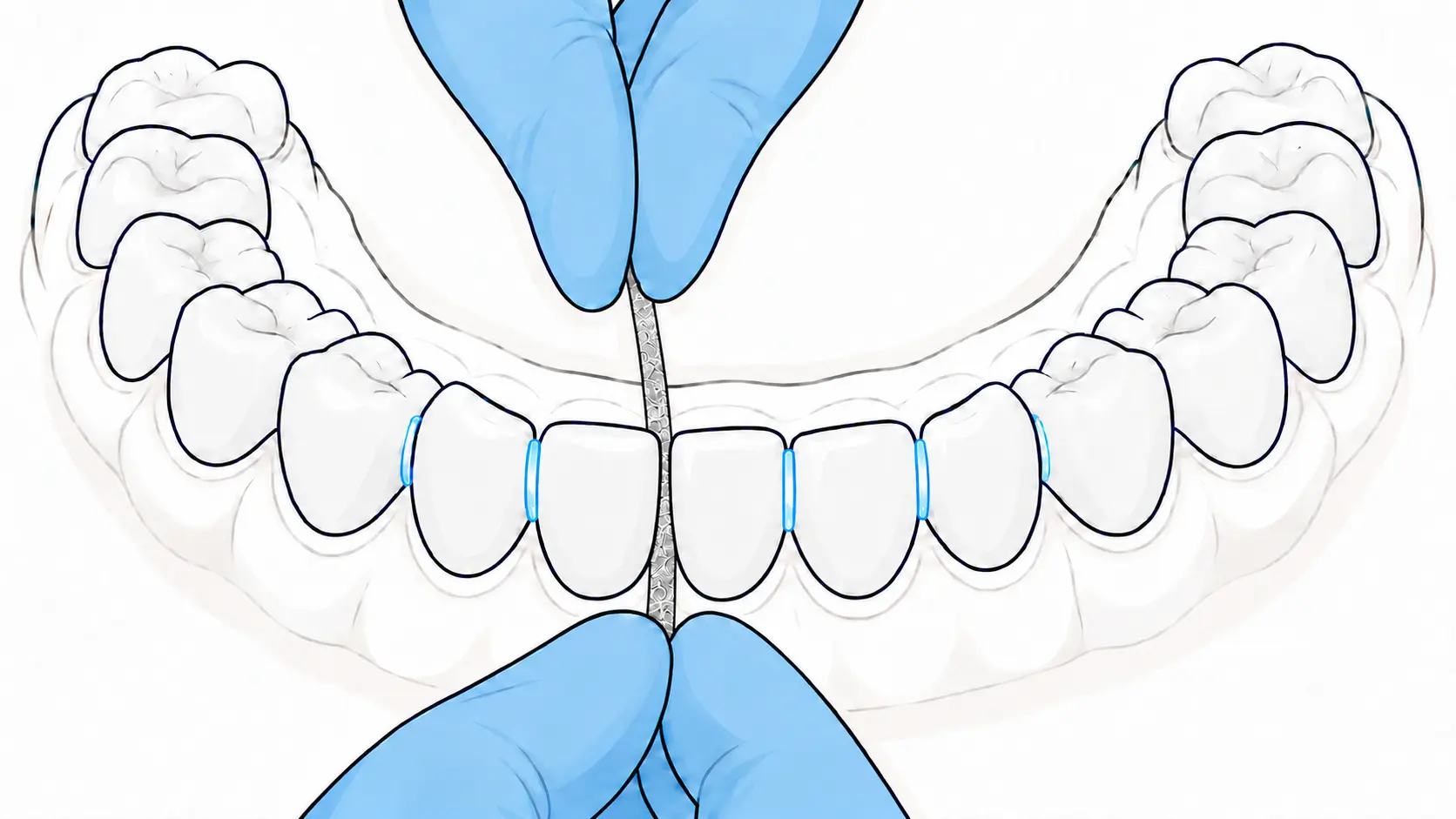
When teeth are crowded, we first need to establish where the space for alignment can come from. One option is to carefully reduce small amounts of enamel at selected contact surfaces between the teeth.
Depending on the findings, around 0.1–0.2 mm may, for example, be removed from selected tooth surfaces. We plan the precise amount based on tooth shape, available enamel and space requirements; the treated surfaces are smoothed and polished. The aim is to align teeth favorably within their bony boundaries, rather than tipping them too far outward simply to create space.
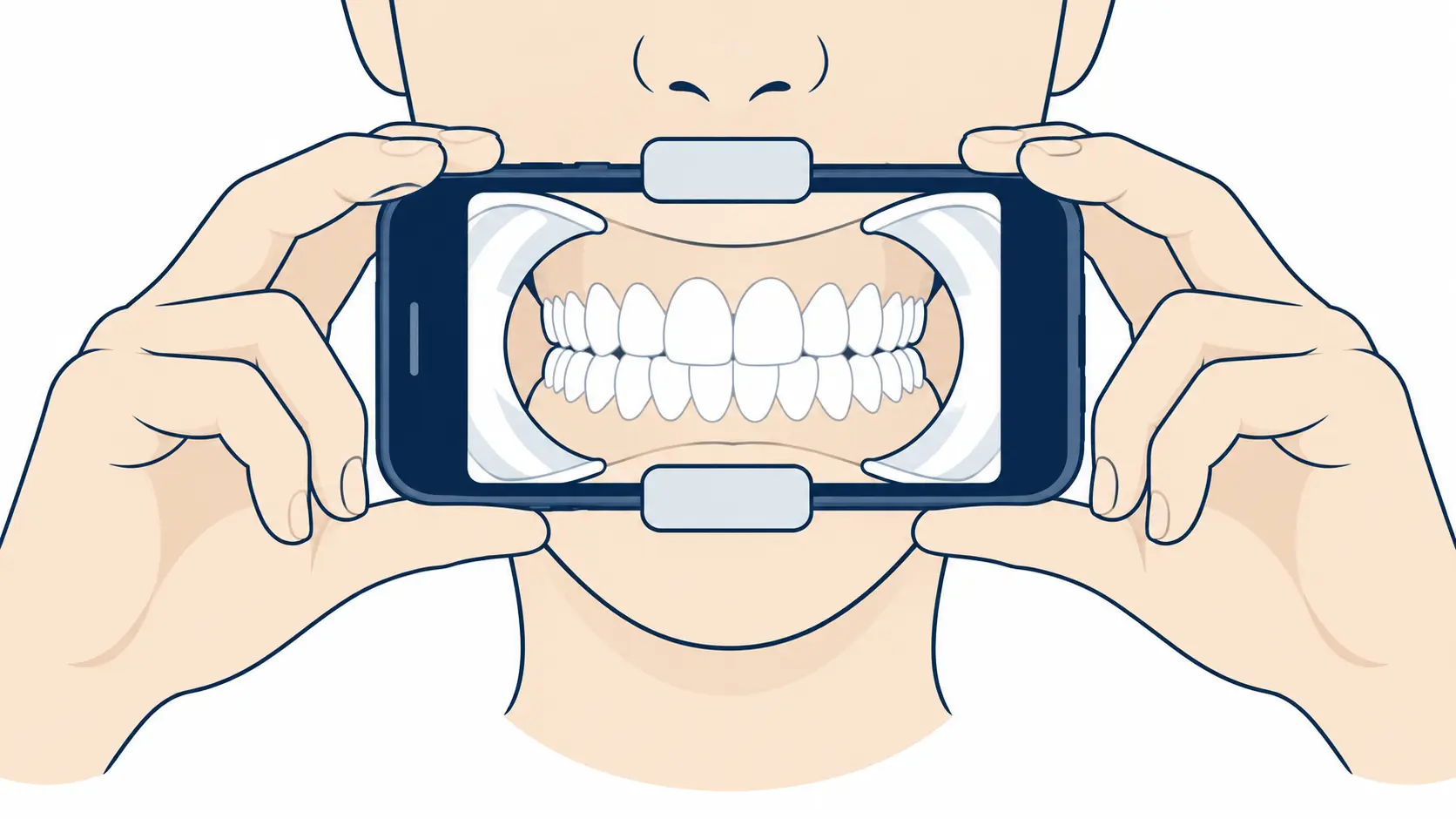
Take the practice home with you: using a smartphone holder, your smartphone and an app, you take images of your teeth weekly or every two weeks according to our plan – with aligners or fixed braces.
This supports our assessment between in-person visits. Signs of a poorly fitting aligner or a possibly loose bracket may prompt us to contact you early and agree on the next steps. Detecting and resolving problems promptly can often prevent unnecessary interruptions and lost treatment or wear time. You can also send us questions through the app. The images do not replace a full examination; we set check-up intervals individually. Not every problem is visible in photographs. Please contact the practice directly if you have acute symptoms.
Let’s find out together what makes sense for you.